
Technology has become one of the biggest drivers of business success. Yet many organizations still struggle because their IT teams and business leaders operate with different priorities. While business leaders focus on growth, revenue, and customer satisfaction, IT departments are often measured by uptime, security, and operational efficiency.
When these priorities are disconnected, businesses experience wasted investments, delayed projects, poor customer experiences, and missed opportunities.
IT and business alignment ensures that technology is not simply supporting the organization—it is actively driving business growth. When both sides work toward the same goals, organizations become more agile, efficient, secure, and competitive.
Here are five essential elements that help create strong alignment between IT and business.
1. Shared Business Goals
Every technology investment should directly support a business objective.
Before implementing new software, cloud infrastructure, cybersecurity solutions, or digital transformation initiatives, organizations should ask a simple question:
How does this help achieve our business goals?
Whether the objective is increasing revenue, improving customer service, reducing operational costs, or expanding into new markets, IT initiatives should contribute measurable value.
When technology decisions are connected to business outcomes, organizations avoid unnecessary spending and maximize return on investment.
2. Effective Communication
One of the biggest barriers to alignment is communication.
Business leaders often describe challenges in terms of growth and profitability, while IT professionals discuss systems, infrastructure, networks, and security. Without a common language, misunderstandings are inevitable.
Successful organizations encourage continuous communication between executives, department heads, and IT teams through:
Regular strategy meetings
Collaborative project planning
Cross-functional workshops
Clear reporting on technology performance
Strong communication ensures technology decisions support business priorities while allowing leadership to understand technical risks and opportunities.
3. Strong Cybersecurity and Risk Management
Technology alignment is incomplete without security.
As businesses become increasingly digital, cyber threats continue to evolve. Data breaches, ransomware attacks, and unauthorized access can damage customer trust, disrupt operations, and lead to significant financial losses.
Security should not be treated as an afterthought or solely an IT responsibility. Instead, cybersecurity should be integrated into every business decision.
Organizations that prioritize:
Identity and Access Management (IAM)
Zero Trust security models
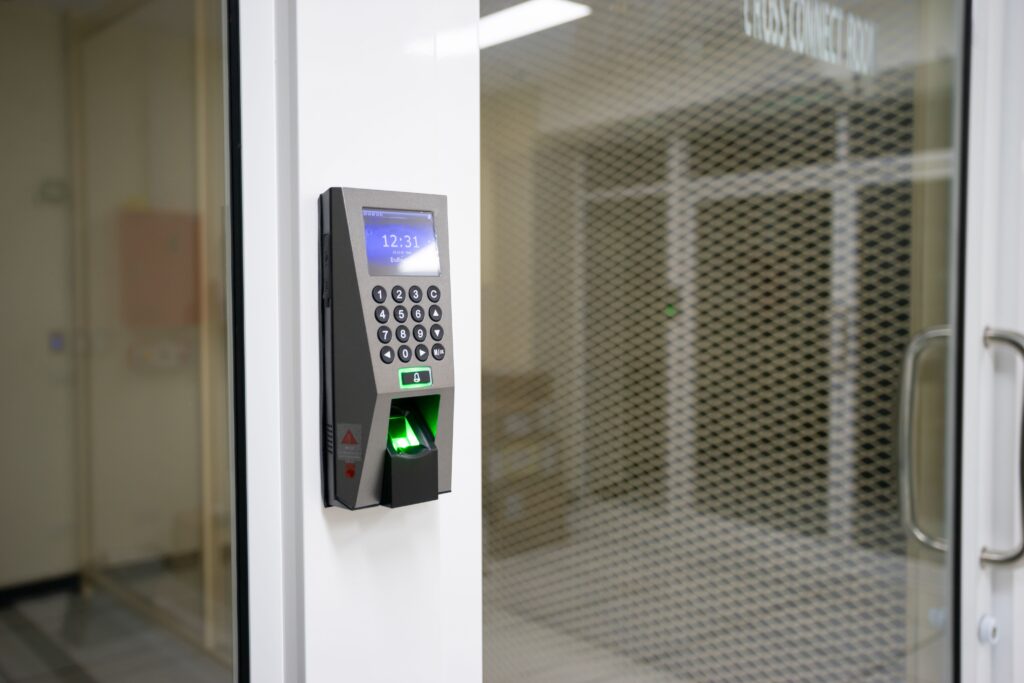
Biometric access control
Network monitoring
Employee security awareness
Compliance and governance
are better positioned to protect their assets while supporting long-term business objectives.
Security enables growth—it should never be viewed as an obstacle to innovation.
4. Data-Driven Decision Making
Modern organizations generate enormous amounts of data every day.
Businesses that align IT with strategic goals leverage this data to improve decision-making across every department.
With the right technology solutions, organizations can monitor:
Customer behavior
Operational performance
Financial trends
Employee productivity
Security incidents
Business intelligence metrics
Real-time insights allow leaders to make faster, more informed decisions while identifying opportunities for innovation and continuous improvement.
Data transforms technology from a support function into a strategic business asset.
5. Continuous Innovation and Adaptability
Technology changes rapidly, and businesses that fail to adapt often struggle to remain competitive.
IT and business alignment requires a culture of continuous improvement.
Organizations should regularly evaluate:
Existing technology infrastructure
Business processes
Customer expectations
Emerging technologies
Automation opportunities
Artificial Intelligence solutions
Businesses that embrace innovation can respond more quickly to market changes, improve operational efficiency, and deliver better customer experiences.
Adaptability is no longer optional—it is a competitive advantage.
Final Thoughts
Technology is no longer just a support department; it is a strategic driver of business success. Organizations that align IT with business objectives communicate more effectively, strengthen security, make smarter decisions, and innovate with confidence.
At Macroscale Inc., we help organizations bridge the gap between technology and business through secure IT infrastructure, cybersecurity, biometric access control, cloud solutions, networking, and managed IT services. Our goal is simple: deliver technology that supports your business strategy, protects your assets, and enables sustainable growth.
When IT and business move in the same direction, organizations are better equipped to overcome challenges, seize new opportunities, and achieve lasting success.



Some leaders consider business and technology objectives interchangeable, allowing one to inform the other. Those that align their information technology systems with their overall business strategy have the best chances of achieving their short- and long-term objectives.